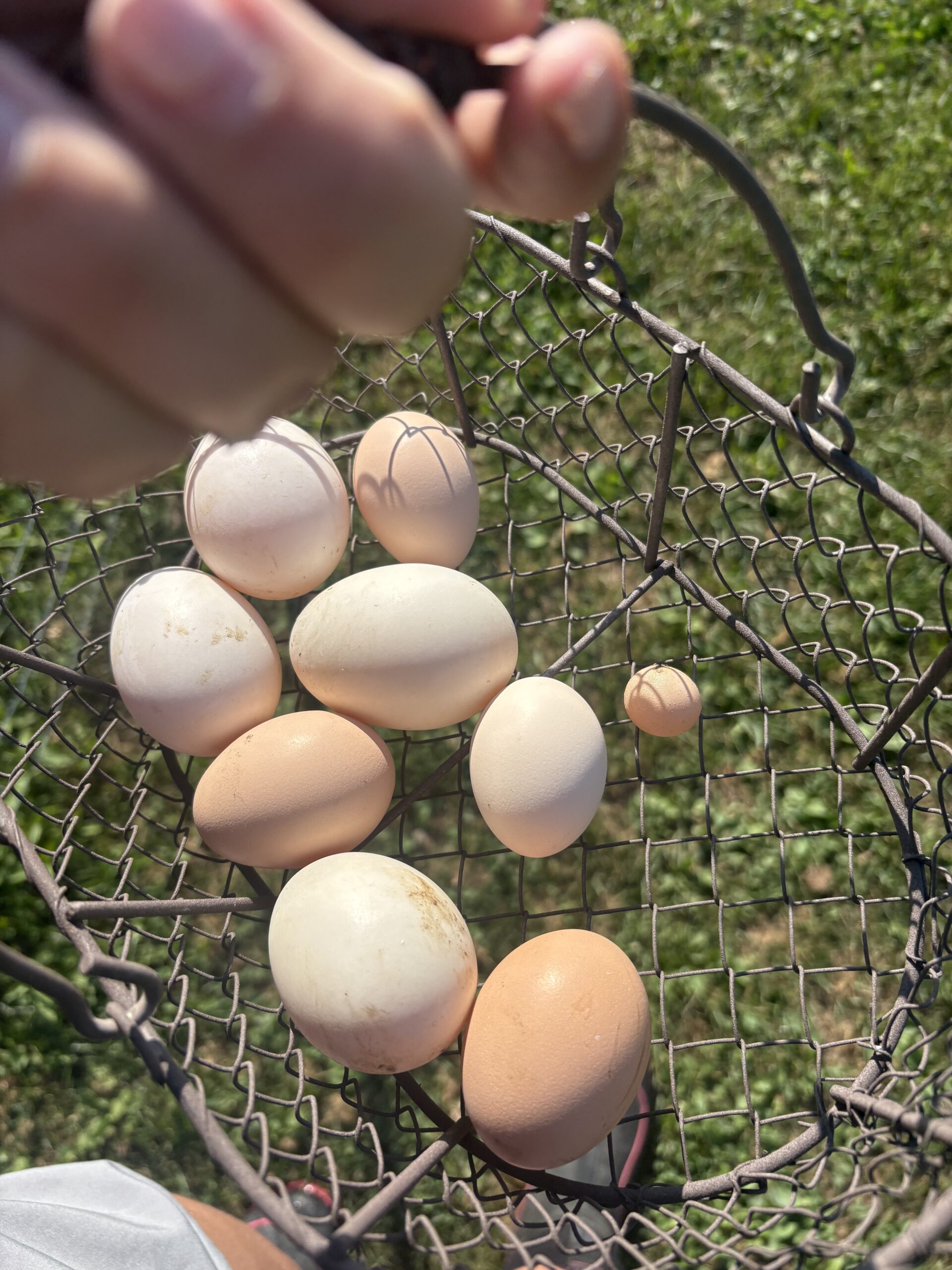

We’re all so used to the uniform size of store-bought eggs, but farm-fresh eggs—no matter the size—are always tastier and better for you.
One of the most common questions we get at the stand is, “Why are your eggs smaller than the ones at the grocery store?” The short answer: our hens are all individuals, and many of them are still young. But let’s dig into the details, because it’s actually pretty fascinating!
Age Matters

This year we added a lot of new hens to our flock, and most of them are just starting to lay. When a young hen (called a pullet) first begins producing, her eggs are naturally smaller. These are sometimes called pullet eggs. Over the course of a few weeks to a month, her eggs gradually grow into the “normal” size for her breed. Those first tiny eggs are actually a fun sign of a healthy hen starting her laying journey.
Breed Differences

Not all chickens are built the same! Egg size can vary quite a bit depending on the breed. For example, we have two bantams, which are naturally smaller birds and will always lay smaller eggs. On the other hand, breeds like our black sex-linked hens typically produce medium to large brown eggs, while our olive eggers and Easter eggers give us those beautiful green and blue shades—sometimes on the smaller side when they’re just starting out.
Stress & Environment
Just like people, hens don’t always perform their best when stressed. Weather changes, predators, or even not getting quite enough feed or water can cause them to lay smaller-than-usual eggs for a time. Thankfully, once the stressor is gone, things usually return to normal.
Genetics & Nature

Even within the same breed, every hen is unique. Some simply lay smaller eggs than expected. Think of it like people—there’s an “average” height, but not everyone fits neatly into that chart.
⸻
So if you notice some smaller eggs in your carton, don’t worry—it’s completely normal. It usually means they’re coming from our younger girls, or from our bantams. The flavor and nutrition are exactly the same (and many people say pullet eggs taste even richer!).
We’re proud of our flock and all the variety they bring—brown, blue, green, big, and small. Every egg tells the story of the hen who laid it, and that’s part of the beauty of buying local and fresh.
Picture: duck eggs (largest), chicken eggs, and a “fairy” egg (first egg or even last eggs for some hens)
